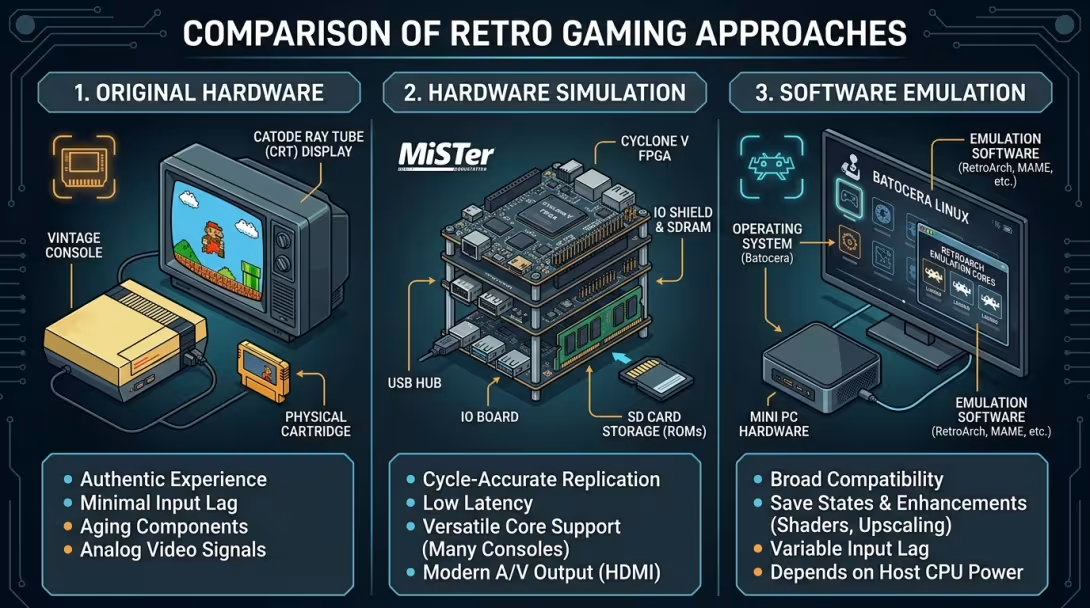
Retro Architecture Comparison: MiSTer FPGA, Batocera & RetroArch Latency Matrix
Retro gaming can be approached in three distinct ways, ranging from original vintage consoles to cycle-accurate hardware simulation and flexible software emulation.
🧰 The Three Core Approaches to Retro Gaming
1. Original Hardware
2. Hardware Simulation (FPGA)
3. Software Emulation
1.1 Original Hardware
Original hardware is the most true to the original nostalgic experience, but it is also the most costly and impractical:
- Pros: 100% authentic feel, original media/cartridges, true preservation value.
- Cons: High financial cost, upkeep and repair require specialized soldering knowledge, and switching between systems requires physical hardware swaps and AV routing.
- Verdict: Not pragmatic if you want a clean, all-in-one living room setup.
2.1 Hardware Simulation (FPGA / MiSTer FPGA)
Hardware simulation eliminates the burden of maintaining legacy physical chips while remaining cycle-accurate to the original experience.
What is MiSTer FPGA?
The MiSTer FPGA project is an open-source hardware emulation platform designed to recreate vintage gaming consoles, computers, and arcade systems with cycle-accurate precision and virtually zero input latency. Unlike software emulators running on modern operating systems, MiSTer reconfigures physical FPGA logic elements to mimic original motherboards and custom chips at the hardware level.
- MiSTer FPGA Hardware Overview on RetroRGB
- DE10-Nano Development Kit (Terasic Archive)
- Limitations of the Current MiSTer FPGA Platform
Capabilities & Scope:
- Simulates hardware from the 1960s up to ~2000 (Arcade CPS 1/2/3, NeoGeo, SNES, Genesis, Amiga, PS1).
- Scope Considerations: MiSTer excels at pre-2000 8-bit, 16-bit, and 32-bit systems. However, it does not handle post-2000 64-bit/modern 3D platforms (GameCube, PS2, PS3, Switch).
3.1 Software Emulation
Software emulation is the most flexible, user-friendly, and cost-effective approach.
Popular Software Emulation Platforms:
- RetroArch: Universal cross-platform frontend for emulators (cores).
- EmulationStation: Graphical front-end for browsing game ROMs with rich metadata and artwork.
- EmuDeck / RetroDeck: All-in-one automated emulator installation & configuration tools.
- Batocera.linux: Standalone, retro gaming Linux distribution bootable from a USB drive or dedicated mini PC.
- Pros: Emulates 6th, 7th, and 8th-generation consoles (PS2, PS3, GameCube, Wii U, Switch), cheap/existing PC hardware, convenient unified interface.
- Cons: Software translation layers can introduce minor input latency or timing deviations compared to real hardware or FPGA.
🎯 My Personal Strategy & Decision
My goal is not to collect and maintain dozens of legacy physical consoles. I don't want to spend excessive money on maintenance or cable clutter in the living room, so Option 1 (Original Hardware) is written off.
The decision balances MiSTer FPGA (for zero-latency 8-bit / 16-bit / arcade gaming) alongside a Software Emulation PC (Batocera / Steam) for post-2000 3D systems (GameCube, PS3, Switch).